

Sarah Dickinson
18 May 2018
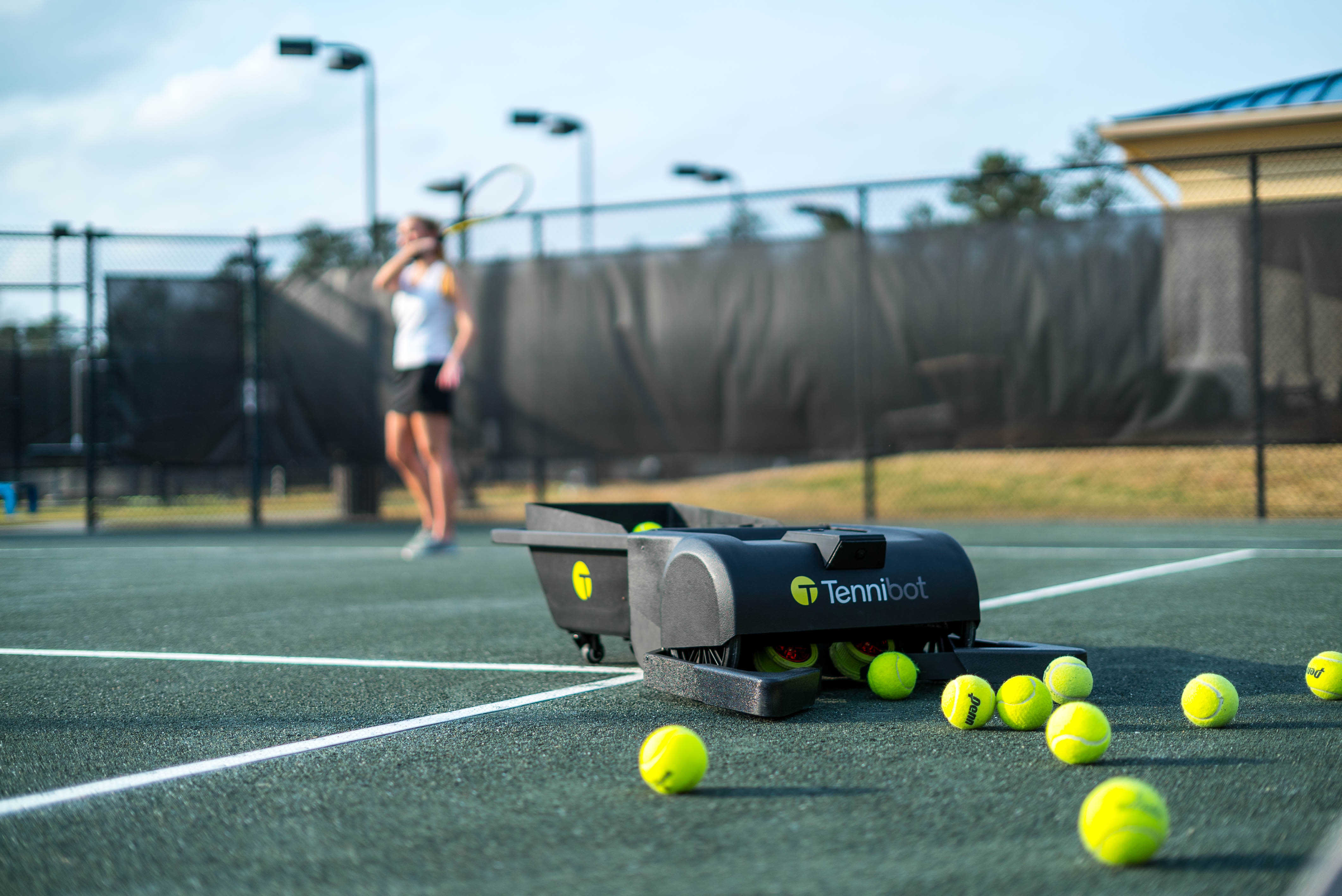
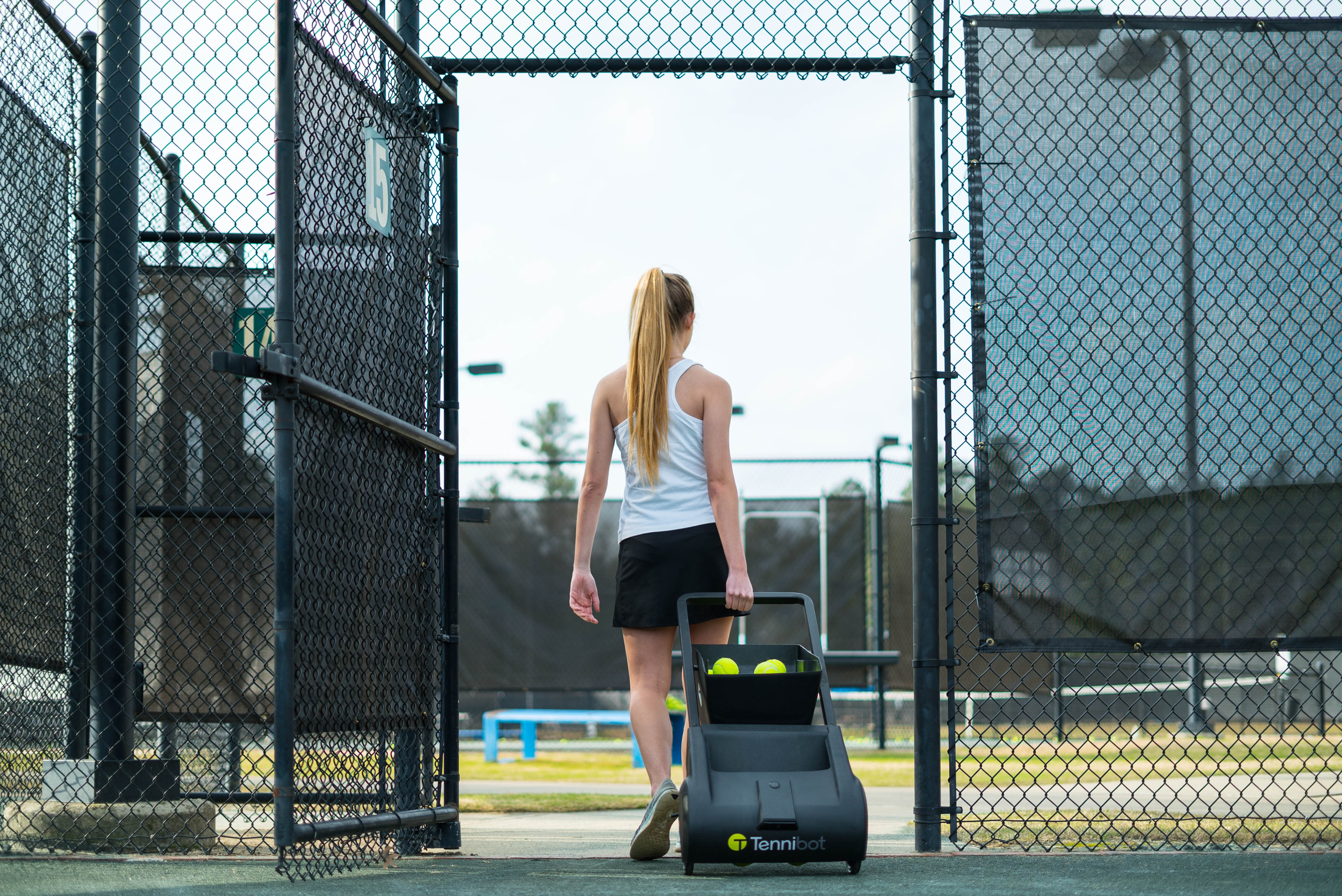
From manufacturing plants to homes, robots have become a staple in the modern world for making life easier. This ability to boost convenience is what the startup company, Tennibot, is looking to bring to tennis courts around the world. Tennibot is the world’s first robotic tennis ball collector, or alternatively, an autonomous ball boy. After realising that players and coaches spent more time picking up tennis balls on the court rather than hitting them, the US-based team designed Tennibot to make this tedious part of the sport a thing of the past. As the only non-manual option for collecting balls, Tennibot is already making big waves in the tennis equipment industry. For the tennis players reading, Tennibot’s handy calculator works out how much money could be saved per year depending on the frequency of play.
Tennibot uses computer vision and artificial intelligence to detect tennis balls on the court and collect them. The device has already received international recognition and prestigious awards including the Tennis Industry Association Innovation Award and the 2018 Honoree Award from the Consumer Electronics Show (CES).
To develop an advanced robot like Tennibot, which equips state-of-the-art perception and sophisticated planning algorithms, a versatile operating system that allows a short prototype-testing cycle is very important – which is where Ubuntu comes in. The Tennibot team chose their OS about 6 months into the development once the basic functionality of the robot was set up. They realised they couldn’t continue to live on an Arduino and needed to move to a single board computer (SBC). At first, a Raspberry Pi was used so the natural OS choice was Raspbian but it soon became apparent a more powerful SBC was required which is when the switch to Ubuntu occurred. Two years on, and Ubuntu is still in use providing the stability needed. The main issues the team run into these days are more mechanical or related to their own software.
Why else did the Tennibot team turn to Ubuntu originally? “We needed something that was both light and compatible with libraries and existing software. Given the geographical spread of where the Tennibot would end up, our final choice needed to have remote upgrading capability too. And of course, both for ourselves plus our users who are not tech savvy, it needed to be solidly tested and stable” said Lincoln Wang, CTO at Tennibot.
Haitham Eletrabi, CEO of Tennibot adds, “The compatibility with software like ROS and OpenCV makes the implementation and testing of Tennibot’s algorithms an easy task. The support from the Ubuntu community also simplifies debugging the device’s software. In addition, Ubuntu is so versatile with different sensors and components that it really makes it the more superior option for us.”
Time was of the essence for Tennibot to get their robot into development and move to production stage once the necessary steps had been taken in between. Their adoption of Ubuntu in this process was crucial and as Lincoln admits, it did take them a bit of time to get familiar with the OS as there was a learning curve. However, once that familiarity was built, the development became very streamlined and was achieved within 3 months.
“Ubuntu’s potential for customisation makes it very easy to be integrated into embedded hardware. The advantages of using Ubuntu improved the efficiency of our product development significantly” comments Lincoln Wang, CTO, Tennibot. Tennibot has recently launched on Kickstarter and is available to purchase for highly-discounted prices. The team reached their fundraising goal in less than 14 hours and continues to take orders for the rest of the campaign. Tennibot plans to ship the first batch to backers in January 2019. For more information about this crowdfunding campaign, visit the Kickstarter campaign page here.


